Browser Games vs Downloadable Games
The debate surrounding digital and physical gaming has evolved significantly over the years. It has led to a broader conversation about the differences between browser-based and downloadable formats. As someone who has enjoyed gaming since my first console, a Sega Mega Drive, I have witnessed this transformation firsthand.
For many years, physical cartridges and discs were the only options available. However, the rise of the online world has changed everything. Today, players often own hundreds of digital titles, far surpassing what they could ever store physically. This shift raises an important question: is one format genuinely better than the other?
In this article, I will explore the pros and cons of each format. Key areas will include performance, accessibility, cost, and platform-specific considerations. My aim is to provide insights that help you make an informed choice based on your gaming habits and preferences.
As we delve into this analysis, I invite you to reflect on your own experiences with both formats. Let’s discover how they compare in today’s gaming landscape.
Key Takeaways
- The gaming landscape has shifted from physical to digital formats.
- Browser-based and downloadable options offer distinct advantages and challenges.
- Accessibility and performance vary significantly between the two formats.
- Understanding costs can influence your gaming choices.
- Your personal gaming habits play a crucial role in determining the best option.
Understanding the User Intent Behind Browser Games vs Downloadable Games
The choice between different gaming formats reflects a variety of player intentions and needs. Understanding these motivations can enhance the gaming experience for everyone involved.
Defining Browser and Downloadable Games
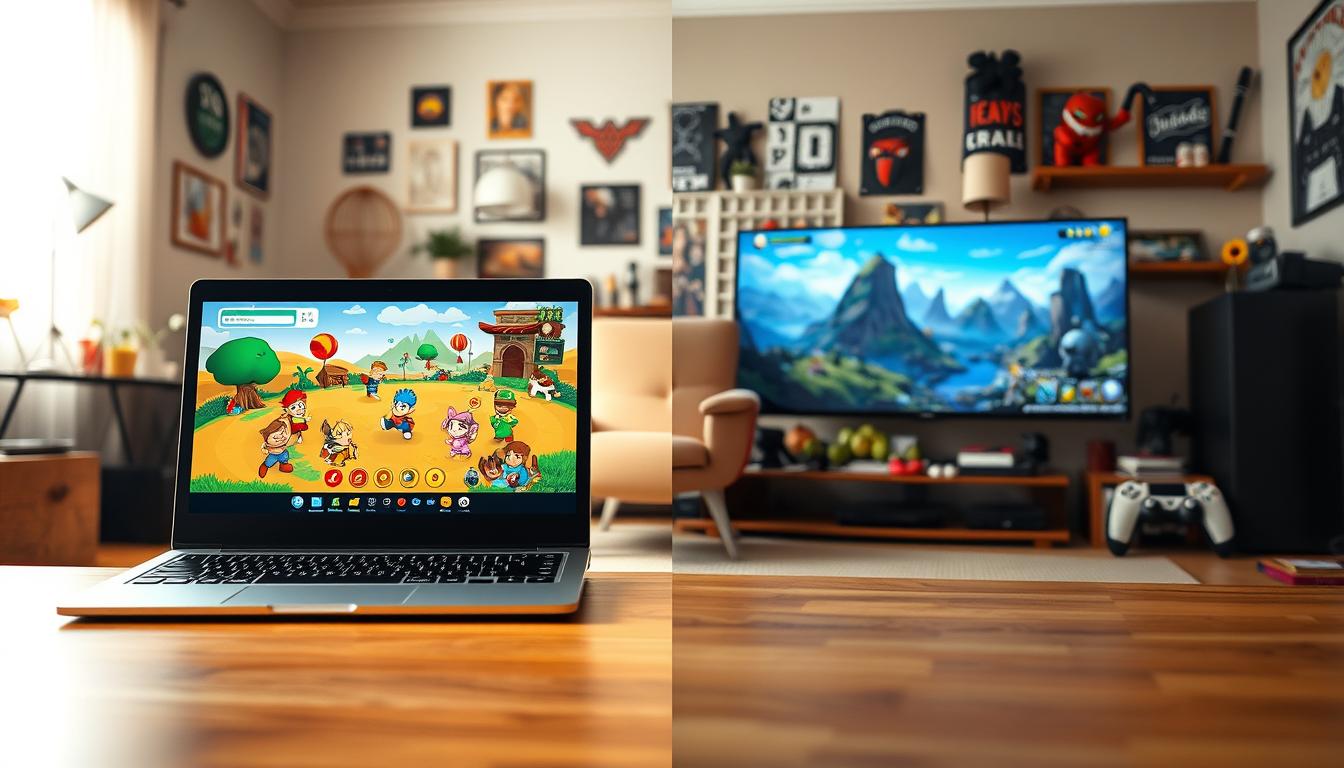
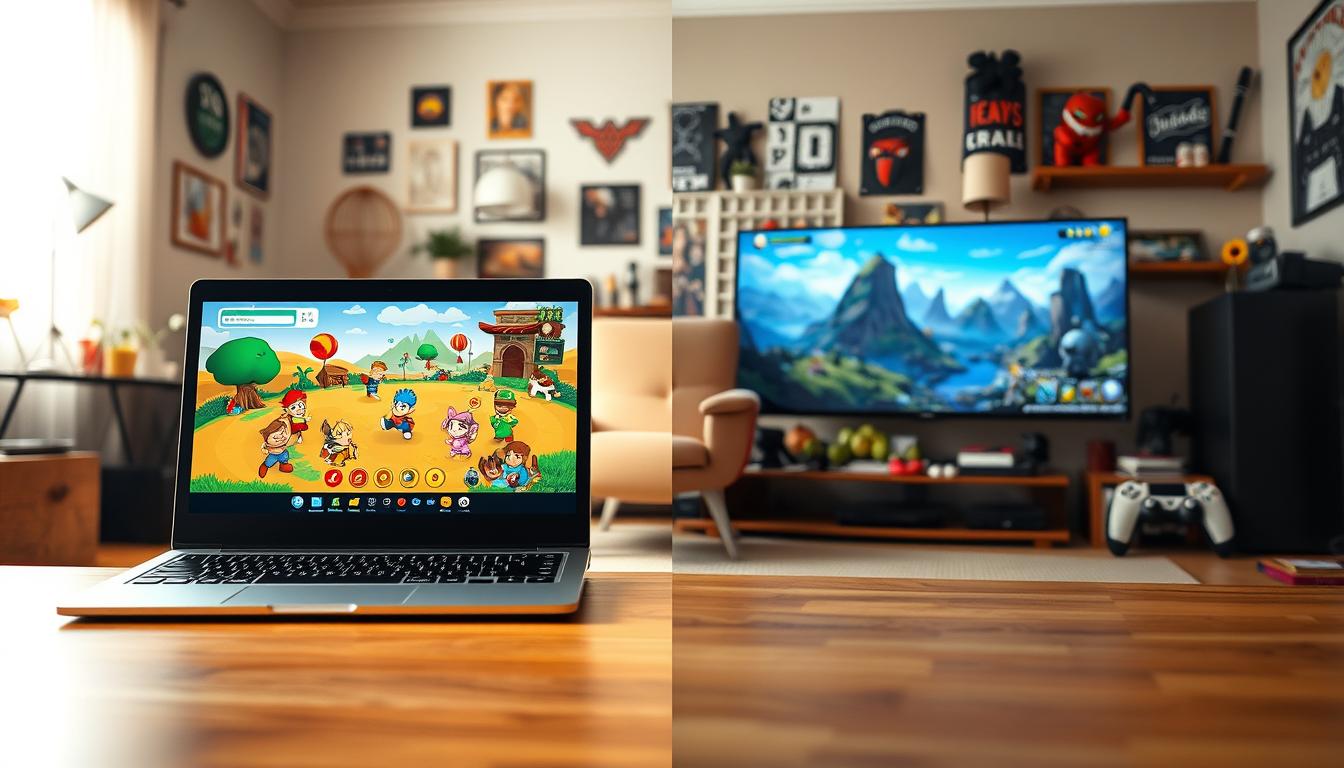
First, let’s clarify what we mean by browser games. These are titles that run directly in web browsers like Chrome, Firefox, Safari, and Opera. They do not require any installation process, making them instantly accessible.
In contrast, downloadable games require players to install dedicated software or apps on their devices. This can be on a PC, console, or mobile device. The installation process can sometimes deter casual players.
Browser games are typically built using technologies like HTML5, JavaScript, or WebGL. This allows them to be platform-agnostic, meaning they can be played on various devices without compatibility issues. Downloadable games, however, often utilize the full processing power of the device, resulting in richer graphics and more complex gameplay mechanics.
Why Gamers Choose Browser or Downloadable Options
Many gamers prefer browser options for several reasons. The appeal of instant access is significant. There’s no need for storage commitments, and players can try a game without a lengthy commitment. This makes it easy for people to explore new titles without worrying about installation.
On the other hand, downloadable games often provide superior performance. They allow for offline play, which is a major draw for dedicated gamers seeking a more immersive experience. The richer graphics and gameplay complexity often found in these titles can be a deciding factor for many.
Some creators choose to stick with browser-only distribution. A responsive, mobile-friendly website can serve users just as well as a dedicated app, providing flexibility in access. Over the years, the line between these formats has blurred, with many digital games now offering both options.
Ultimately, understanding user intent is crucial. Casual players often gravitate toward browser games for quick sessions, while dedicated gamers invest in downloadable titles for deeper engagement. This distinction highlights the diversity in gaming preferences and the importance of catering to different audiences.
Features and Performance: How Browser Games Differ from Downloadable Games
When it comes to the performance and features of gaming, the differences between formats are striking. The quality of graphics and the complexity of gameplay are two areas where these formats diverge significantly.
Graphics Quality and Gameplay Complexity
In general, downloadable games tend to offer superior graphics quality. They can fully utilize a device's GPU and CPU, allowing for complex 3D rendering, high-resolution textures, and advanced lighting effects. This leads to a more immersive experience for players.
On the other hand, browser games have made great strides thanks to technologies like HTML5 and WebGL. However, they still face limitations in rendering complex scenes. As a result, many browser games prioritize simpler, stylized art styles that are easier to render in real-time.
Moreover, gameplay complexity often favors downloadable titles. These games support intricate mechanics, expansive open worlds, and deep narrative structures that browser games rarely match. For example, strategy or simulation games often run smoothly in a browser, but their downloadable versions offer enhanced features and smoother performance.
Storage and Device Requirements
Storage is another crucial factor to consider. Downloadable games can consume significant device space—sometimes dozens of gigabytes per title. This can be a real concern for players who prefer to have multiple games installed. For instance, the Nintendo Switch has only 32GB of internal storage on standard models, making storage management a challenge.
In contrast, browser games require virtually no local storage. They eliminate the need for large microSD cards or external drives, which is a major advantage for users with limited device capacity. This allows players to enjoy their favorite titles without worrying about storage space.
Additionally, downloadable games often demand specific hardware specifications, operating system versions, and regular updates. This can be a barrier for some players. On the other hand, browser games are more accessible across a wider range of devices, making them an attractive option for casual gamers.
Ultimately, the trade-off between performance and convenience is a central factor in the debate. The right choice depends on what each person values most in their gaming experience.
Accessibility and Convenience: Playing Anywhere and Anytime

Accessibility is a vital factor when comparing different gaming formats. Players today want to enjoy their favorite titles without restrictions. This is where the differences between browser and downloadable options become clear.
To play a browser game, you need a constant internet connection. This requirement can be a significant problem for users with limited data plans or unreliable connectivity. In contrast, many downloadable titles offer full offline play capabilities once the initial installation is complete.
Internet Connectivity and Offline Play Possibilities
For instance, games like Implosion: Never Lose Hope and Street Fighter IV: Champion Edition are available for Android users to play offline. However, you must purchase these games to enjoy this feature. Games that can be downloaded and played without internet access are much more accessible for those who cannot afford to spend their cellular data on gaming or lack Wi-Fi outside their homes.
Once you download and install a game, you can play it anytime without worrying about connectivity issues. This convenience transforms commuting and waiting in line into enjoyable gaming sessions. However, it's important to note that games can be demanding on your phone's battery. You may need to carry a charger or power bank with you.
Device Compatibility and Installation Process
Device compatibility is another key point. Browser games work across virtually any device with a modern web browser. This eliminates platform-specific barriers, making it easy to access your favorite titles.
On the other hand, the installation process for downloadable games can be time-consuming. You may need to create an account, verify your age, and accept terms and conditions. In many cases, browser games offer instant access with no installation hurdles, making them ideal for quick, casual play sessions.
Once a downloadable game is installed, it provides a seamless experience until an update is required. In contrast, browser games must reload each time you access them. Ultimately, both formats have their strengths in terms of accessibility. The choice often comes down to whether you prioritize instant access or the freedom to play games without internet dependence.
Cost Considerations: Price Differences and Value of Ownership
Understanding the financial implications of gaming formats is essential for any player. The cost of a game can influence not only what you play but also how you engage with it. Let’s break down the different price points and value associated with each format.
Upfront Costs, In-Game Purchases, and Subscription Models
Many browser options are free-to-play, monetized through ads or in-game purchases. This low barrier to entry attracts a lot of players. However, the total cost can accumulate over time, especially if you frequently buy upgrades or items.
In contrast, downloadable titles usually come with a higher upfront cost. While this might seem steep, these games often provide a more complete experience without aggressive microtransactions. I remember purchasing Neverwinter Nights for just 99p, which has given me hundreds of hours of enjoyment. It was the best value for my money!
Digital storefronts like STEAM control the pricing for digital games, often keeping prices steady. Meanwhile, physical copies can sometimes be found at significant discounts during retail clearances, making them an attractive option for budget-conscious gamers.
Reselling, Trading, and Permanence of Physical vs Digital Licenses
One major advantage of physical copies is the ability to resell or trade them. You can gift them or sell them at local stores, ensuring their value lasts longer. Unfortunately, digital games are typically locked to a single account. Once you buy them, they’re yours for good, but you can’t recoup any costs.
Moreover, the days of selling a game you no longer play are gone with digital licenses. This is a significant consideration for many people. Limited-run physical copies, like those of Celeste, can appreciate over time, sometimes selling for over $150. This demonstrates the long-term value of owning a physical copy.
Lastly, consider the permanence of your games. Digital stores have a shelf life. If a platform shuts down or your account is compromised, access to your purchased games can vanish. In contrast, physical copies can be reinstalled and enjoyed indefinitely.
In conclusion, while browser games offer a low-cost entry point, downloadable and physical copies provide different values. Savvy consumers should weigh these factors carefully based on their long-term gaming habits.
The Impact of Platforms: PC, Consoles, and Mobile Experiences with Browser and Downloadable Games
The platform you choose to game on can significantly alter your overall experience. Each format offers distinct advantages and challenges that cater to different types of players. In this section, I will explore how PC, console, and mobile platforms influence gaming choices and experiences.
Console Digital Trends and Offline Gaming Challenges
The console landscape has seen dramatic changes over the years. With the rise of digital gaming, platforms like Xbox and PlayStation have shifted focus toward online connectivity. For instance, Xbox One users often face issues with online activation, even for physical copies.
On the other hand, the Nintendo Switch offers a unique hybrid approach. It supports both physical cartridges and digital downloads. This flexibility allows players to choose based on their preferences. Physical cartridges take up less storage space, as the bulk of game data resides on the cartridge itself.
Moreover, physical copies can be shared or sold, providing added value. Digital versions, while convenient, tie purchases to your account. If you ever need to replace your console, you can still access your digital games.
Mobile Gaming: Browser Access Versus Dedicated Apps
Mobile gaming presents its own set of challenges and opportunities. Players often debate between browser access and dedicated apps. The choice typically depends on screen size, battery life, and processing power.
Complex strategy titles or online casino games tend to perform better in a browser environment. A larger screen can enhance gameplay by displaying all necessary features effectively. However, dedicated apps often provide a more optimized experience tailored to the device.
Additionally, mobile apps can take advantage of device capabilities, such as touch controls and notifications. Yet, browser games allow for instant access without installation hurdles, making them appealing for quick gaming sessions.
Platform | Pros | Cons |
|---|---|---|
PC | Large library, powerful hardware | Requires internet for many titles |
Console | Easy access, exclusive titles | Online activation issues |
Mobile | Portable, quick access | Limited graphics, battery drain |
In conclusion, each platform presents unique trade-offs. Understanding these differences can help gamers make informed decisions about their preferred way of playing. Whether you lean towards physical copies or digital downloads, the right platform can enhance your gaming experience.
Conclusion: Which is Better? Insights from My Gaming Experience
Reflecting on my gaming journey, I've seen how digital and physical formats each have their unique appeal. There’s no one-size-fits-all answer. Both options offer compelling advantages and notable drawbacks that cater to different types of people.
Browser games excel in accessibility and instant play, making them perfect for casual sessions. In contrast, downloadable titles deliver superior performance and deeper gameplay, which dedicated gamers often prioritize.
I personally prefer physical copies, valuing the permanence of owning a game I can hold and play indefinitely. However, I also appreciate the convenience of digital games on my phone.
As the industry shifts towards an all-digital future, I wonder why games are treated differently from music and films, which still offer physical options. Consumers should have the freedom to choose how they buy and play their games.
Ultimately, I encourage you to evaluate your gaming habits, storage capacity, and budget. Consider what works best for you, and feel free to share your experiences in this ongoing debate.